

Views: 0 Author: Site Editor Publish Time: 2026-10-15 Origin: Site


The smooth opening and operational stability of casement windows are closely related to the rational configuration of hardware accessories. Among them, the load-bearing capacity of friction stays is a factor that requires special attention in the door and window design and hardware selection process. For door and window manufacturers, engineering procurement parties and home decoration consumers, choosing friction stays should not be based solely on product appearance or price; rather, a comprehensive judgment should be made in combination with sash weight, dimensions, opening method and actual usage conditions. If the friction stay does not match the sash, it may affect the opening operation and long-term performance of the door or window. Therefore, understanding the approach to determining the load-bearing capacity of casement window friction stays has practical significance for improving the rationality of door and window hardware configuration.
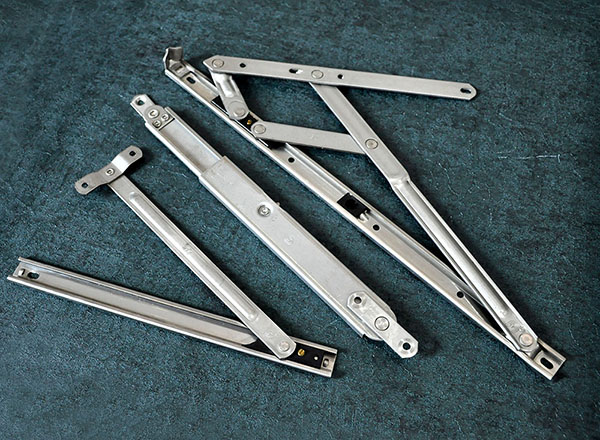
What Factors Are Related to the Load-Bearing Capacity of Casement Window Friction Stays?
Sash weight is an important basis for determining the load-bearing requirements of friction stays. Glass thickness, glass area, profile specifications and the structure of the sash itself all affect the weight of the entire window sash. Generally, the larger the sash and the heavier the glass configuration, the higher the load-bearing requirements for the friction stay and related connecting components. Therefore, in the door and window design stage, the weight should be calculated according to the actual sash structure, and the corresponding friction stay should be selected based on the product's applicable range, rather than judging solely by the appearance dimensions of the window.
In addition to weight, the width and height of the sash and the stress state after opening also affect the actual working conditions of the friction stay. When a casement window is in the open state, the gravity of the sash is transmitted through the hardware connection structure to the friction stay and the installation position. The sash dimensions, opening angle and installation conditions may all affect the stress performance. If only the nominal load-bearing capacity of the friction stay is considered while ignoring the sash structure and installation method, even if the product parameters appear to meet the requirements, the desired usage effect may not necessarily be achieved.
The Load-Bearing Capacity of Friction Stays Should Not Be Judged Only by Parameters; Overall Compatibility Also Matters
In the friction stay selection process, key checks should be made on the product's applicable window type, load-bearing range, specification dimensions and installation requirements. Friction stays of different structures may differ in design form and applicable conditions, and door and window enterprises need to match them according to actual project requirements. For larger or heavier sashes, more attention should be paid to the coordination between the product's applicable range and the overall hardware solution, avoiding simple application of conventional configurations. Specific load-bearing capacity and applicable range should be based on the technical data and relevant testing information provided by the product manufacturer, and should not be inferred solely from appearance or experience.
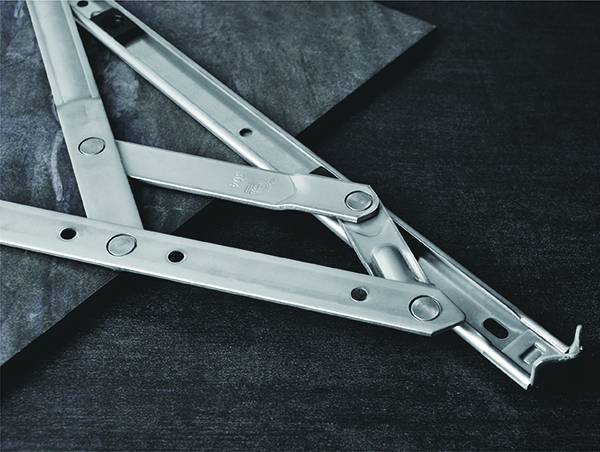
Friction stays are also not hardware components that work in isolation. Window frame profiles, sash structure, connecting screws, installation positions and other supporting hardware all affect the actual operating performance of the entire door and window. If the strength of the installation substrate is insufficient, the fastening method is unreasonable, or the friction stay does not match the window type, the connection stability and opening operation may be affected. Therefore, in addition to product selection, attention should also be paid to processing precision, installation quality and the coordination of supporting components, incorporating the load-bearing capacity of friction stays into a complete door and window hardware configuration plan for consideration.
From Product Selection to Quality Management: Improving the Rationality of Door and Window Hardware Configuration
For door and window manufacturers and engineering procurement parties, friction stay procurement should not be based solely on unit price as the judgment basis; comprehensive consideration should also be given to whether product specifications are complete, whether technical data are clear, whether quality management is standardized, and whether suppliers can provide corresponding product information according to actual application needs. In mass production and engineering projects, fully confirming the window type, sash weight, installation conditions and product applicable range in the early stage helps reduce risks in selection mismatch, installation adjustment and subsequent maintenance. When specific load-bearing values, service life or performance grades are involved, verifiable product data and testing results should be used as the basis.
3H Building Hardware, has long focused on the building hardware and rubber fields and possesses dual research and development and production capabilities for door and window building hardware and sealing weather strips. Its products cover aluminum alloy door and window hardware, plastic-steel door and window hardware, fire-resistant door and window hardware, door control products, curtain wall hardware accessories, window control products and home door and window hardware, among other fields. The enterprise has innovation platforms such as a provincial engineering technology research center, a provincial enterprise technology center and a CNAS-accredited laboratory, and continues to advance research and development and quality management. For door and window enterprises, when carrying out hardware selection, evaluation should be conducted in combination with specific product data and project application conditions to ensure that the configuration plan matches actual needs.
The load-bearing capacity of casement window friction stays may appear to be a specific product parameter issue, but in fact it involves multiple links such as sash structure, stress conditions, hardware compatibility and installation quality. Whether for residential doors and windows or engineering projects, friction stays with a matching applicable range should be selected on the basis of clarifying sash weight and usage conditions, with emphasis placed on supporting design and standardized installation. Only by combining product parameter verification, overall solution matching and quality management can the risk of door and window hardware selection be controlled more reasonably and support provided for the stable use of casement windows.


