

Views: 0 Author: Site Editor Publish Time: 2026-05-29 Origin: Site


In building door and window systems, friction hinges are a common and important hardware component, widely used in casement windows, top-hung windows, and outward-opening windows. During the installation of doors and windows in many engineering projects, while significant attention is paid to profiles, glass, and sealing performance, the quality and specifications of friction hinges directly affect the window's load-bearing capacity, smoothness of operation, and overall service life.
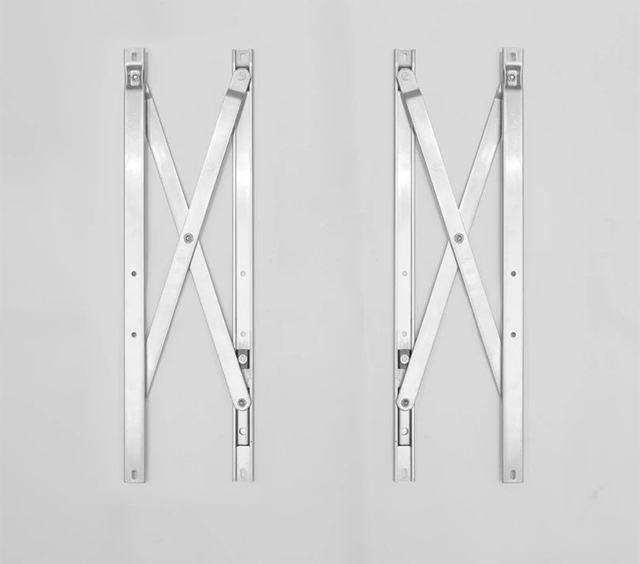
For real estate projects, commercial buildings, school and hospital facilities, and high-rise residential projects, choosing the appropriate specifications and models of friction hinges not only improves window stability but also reduces later maintenance costs. This article will provide a detailed analysis of commonly used friction hinge specifications, selection tips, and practical application suggestions, helping procurement personnel and project managers efficiently select door and window hardware.
What are Friction Hinges?
Friction hinges, also known as window stays or friction stays, are hardware connectors installed between the window sash and frame. Their main function is to support the sash during opening and control the opening angle, ensuring stable and smooth operation.
Common types of friction hinges in engineering projects include two-bar linkages, four-bar linkages, stainless steel friction hinges, heavy-duty friction hinges, and concealed friction hinges. Among these, four-bar linkage friction hinges are the most widely used in engineering windows, suitable for aluminum windows, thermal-break aluminum windows, and system windows.
Commonly Used Friction Hinge Specifications in Engineering Projects
Different building projects have varying requirements for window size, load-bearing capacity, and opening methods, leading to significant differences in friction hinge specifications. Below are some of the most commonly used specifications in current engineering projects.
10-Inch Friction Hinge
10-inch friction hinges are typically suitable for small-sized windows, such as bathroom windows, kitchen windows, and windows in auxiliary areas.
Their characteristics include small size, easy installation, low cost, and suitability for lightweight sashes. They are generally suitable for small outward-opening windows with a sash height within 600mm.
12-Inch Friction Hinge
The 12-inch size is one of the mainstream specifications in engineering projects, with a wide range of applications.
It is suitable for ordinary residential windows, office building casement windows, and school project windows. This specification offers a good balance between load-bearing capacity and operational stability, making it a preferred choice for many engineering projects, often in the form of 12-inch stainless steel four-bar friction hinges.
14-Inch Friction Hinge
14-inch friction hinges are mainly used for medium to large windows, especially common in high-rise buildings.
Their advantages include stronger load-bearing capacity, more stable sash operation, and better wind resistance. For thermal-break aluminum system windows, 14-inch friction hinges can effectively enhance overall window stability.
16-Inch and Above Heavy-Duty Friction Hinges
Large commercial buildings, hotels, and curtain wall supporting windows typically use 16-inch or even 18-inch heavy-duty friction hinges.
These friction hinges feature high load-bearing capacity, strong corrosion resistance, and long service life, making them suitable for oversized sashes. Particularly for engineering projects in coastal areas, it is recommended to prioritize heavy-duty friction hinges made of 304 or 316 stainless steel to enhance resistance to salt spray corrosion.
Common Material Analysis for Engineering Friction Hinges
Besides specifications, the material of the friction hinge is also an important reference standard in engineering procurement.
201 Stainless Steel Friction Hinges
201 stainless steel friction hinges are relatively low in price, suitable for ordinary residential projects, but their corrosion resistance is average. For projects located in humid areas or coastal cities, long-term use of 201 material is not recommended.
304 Stainless Steel Friction Hinges
304 stainless steel friction hinges are currently the most widely used in the engineering market.
Their advantages include strong rust resistance, long service life, high stability, and good cost-performance. Most mid-to-high-end engineering projects prioritize 304 stainless steel friction hinges.
316 Stainless Steel Friction Hinges
316 stainless steel friction hinges are a high-end engineering configuration, offering even stronger corrosion resistance.
They are particularly suitable for seaside buildings, high-humidity areas, chemical industrial parks, and high-end commercial projects. Although the procurement cost is higher, the long-term maintenance cost is lower.
Key Selection Tips for Engineering Project Friction Hinges
Select Based on Sash Weight
Many engineering project issues such as window sagging, noise, or poor closure are often related to insufficient load-bearing capacity of the friction hinge.
Therefore, during procurement, it is crucial to confirm the sash size, sash weight, glass thickness, and opening method. Larger sashes require thicker or heavy-duty friction hinges.
Pay Attention to Hinge Thickness
The thickness of friction hinges on the market varies considerably.
Common thicknesses include 2.0mm, 2.5mm, and 3.0mm. For engineering projects, it is recommended to prioritize products with a thickness of 2.5mm or above for better overall stability and reduced deformation issues over long-term use.
Inspect the Rivet Quality
Many low-cost friction hinges tend to loosen during use, primarily due to poor-quality rivets.
High-quality friction hinges typically feature firm riveting, smooth opening and closing, no significant play, and low operating noise. It is advisable to perform actual opening and closing tests during procurement.
Value Corrosion Resistance
Especially for projects in southern regions, coastal areas, and high-rise buildings, greater attention must be paid to the corrosion resistance of friction hinges.
It is recommended to focus on salt spray test duration, stainless steel material, and surface treatment processes. This effectively reduces later maintenance issues.
How to Choose a Reliable Friction Hinge Manufacturer
For engineering procurement, selecting a stable and reliable friction hinge supplier is equally important.
It is advisable to evaluate factors such as experience in supplying engineering projects, ability to support bulk customization, presence of quality testing procedures, ability to ensure stable delivery times, and provision of technical support.
Reputable manufacturers typically provide load-bearing test reports, salt spray test reports, and installation technical guidance, helping engineering projects proceed smoothly.
Conclusion
As the building door and window industry continues to upgrade, engineering projects have increasingly higher requirements for door and window hardware. Although a small component, friction hinges directly affect the safety, stability, and long-term user experience of windows.
In the actual procurement process, it is recommended to comprehensively consider project requirements, window structure type, usage environment, and budget to select appropriate friction hinge specifications and materials. Especially for large-scale engineering projects, prioritizing high-quality, corrosion-resistant stainless steel friction hinges can effectively reduce later maintenance costs and improve overall project quality.
Looking ahead, with the development of system windows and the high-end building market, high-quality friction hinge products will become an important direction for the development of engineering door and window hardware.


